What Was Their Religion Like?
by Alisa and Soren.
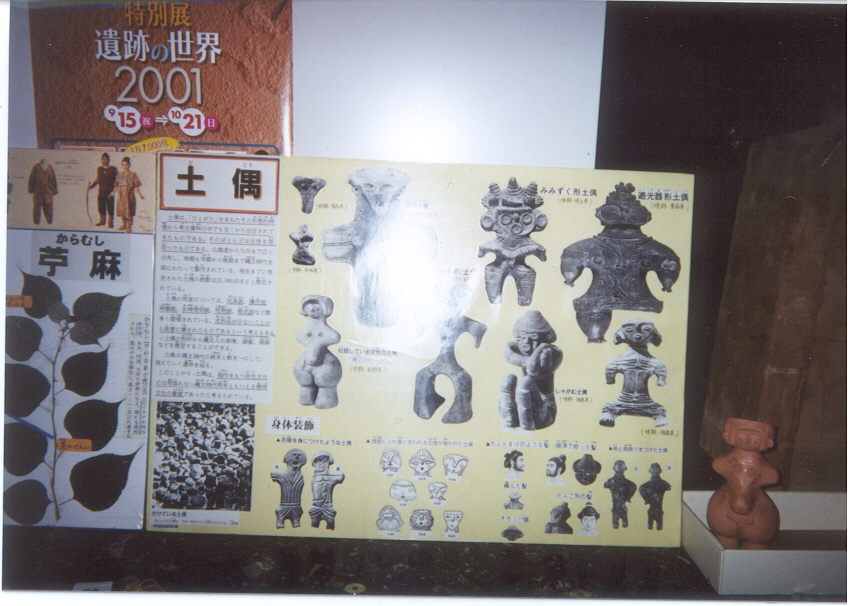
When Soren went to the museum at Fuchu Kyodo no Mori, he saw an exhibit where there were displays of pottery statues from 700-250 A.D. The statues were made out of reddish-brown clay. The statues were not significantly large, although Soren did see one statue that was about four feet tall. All the pottery statues were extremely detailed in patterns. All the statues were of pregnant women. From the statues, archaeologists were able to conclude that Jomon and Yayoi people worshipped pregnant woman and nature (fertility). Because of their need for lots of harvest, a larger population, and good health, they would worship statues of fertility for help. Some of the other statues were also worshipped to have more animals to hunt so they could survive.
Religion was an important factor in most common river civilizations. In almost all river civilizations, people worshipped god(s) /goddesses in nature. The need for fertility can perhaps explain why so many river civilizations have been found to have some evidence of fertility worship. Dependency on nature to live has always been an important influence on culture. The statues Soren saw of pregnant women can suggest that the Jomon and Yayoi people shared similar characteristics with other river civilizations when referring to religion. For example, the Indus River civilization had many statues of gods and goddesses as they worshipped fertility. They were dependent on their crops and harvest and having lots of food and surplus was very important. We can conclude from what Soren saw in the museum that this was the same for the Jomon and Yayoi people.